
留守儿童
China’s chip exports nearly double in Jan-Jul; ‘New new three’ products to fuel continued export growth_我的网站

一 | 吴振顺被判坐牢15个月又6周,但他对裁决与判刑不满,将继续上诉。
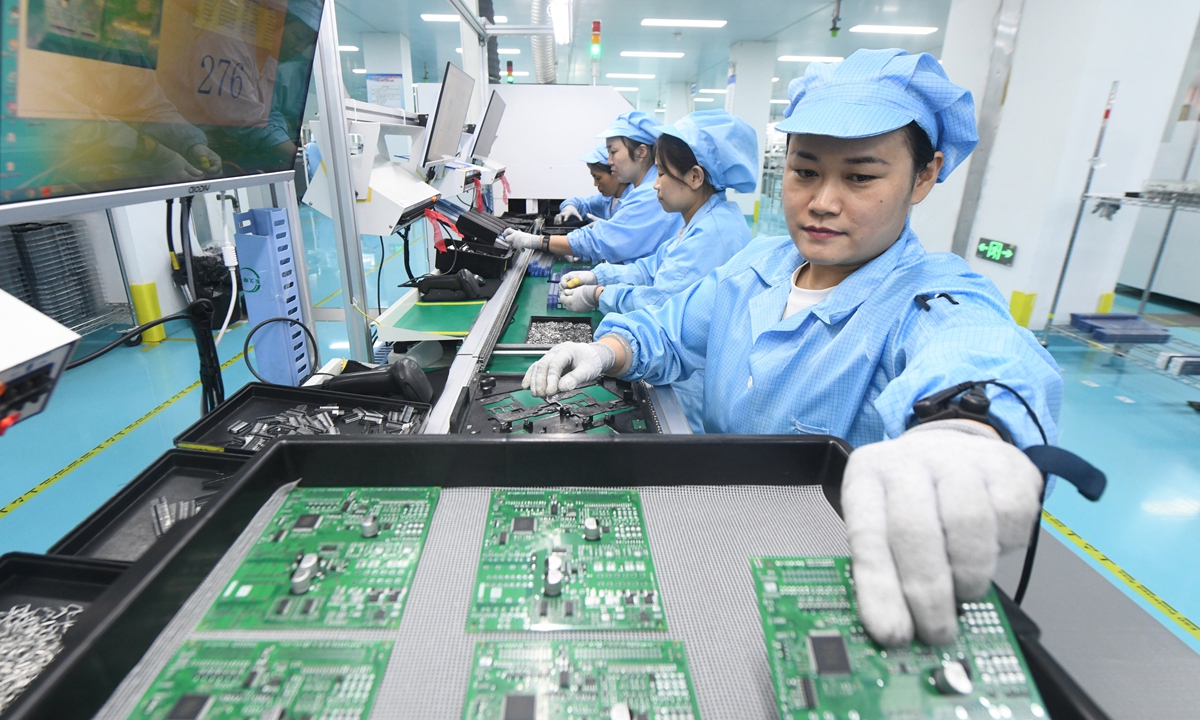
China's exports of integrated circuits (ICs) reached $216.02 billion in the first seven months of 2026, up 99.5 percent year-on-year, according to data released by the General Administration of Customs (GAC) on Friday.
Chinese experts said that rising global artificial intelligence (AI) demand is a factor, but the main drivers of the leap in chip exports are the country's technological breakthroughs and upgraded industrial chain.
The robust growth in IC exports also came as China's overall foreign trade saw stable expansion. According to data released by the GAC, the sound upward trend in China's foreign trade continued in July, with growth of 19.2 percent year-on-year to reach 4.66 trillion yuan ($686.26 billion), remaining above 4 trillion yuan for the fifth consecutive month.
In the first seven months of the year, total foreign trade in goods amounted to 30.13 trillion yuan, up 17.3 percent year-on-year, the data showed.
"Since the start of this year, China's economy has forged ahead against headwinds and moved toward innovation-driven, higher-quality development, providing strong underpinning for the growth of foreign trade," said Lü Daliang, an official with the GAC.
According to the GAC, China's exports of electromechanical products reached 11.12 trillion yuan between January and July, up 21.2 percent year-on-year. They accounted for 63.8 percent of the country's total exports, up 3.8 percentage points on a yearly basis.
There was notable progress in green and low-carbon products, with exports of electric vehicles (EVs) and lithium batteries rising by 71.2 percent and 35.8 percent, respectively, while exports of 3D printers soared by 110 percent, with industrial robots jumping 13.2 percent and ships 32.7 percent.
"The surge in China's chip exports reflects breakthroughs in multiple aspects," Fu Liang, a Beijing-based tech analyst, told the Global Times on Friday. Fu pointed to a rise in mature-node capacity, industrial and supply chain resilience, and scale production advantages of Chinese companies.
As demand for chips in automotive electronics, industrial control systems, and household appliances keeps rising, China-made mature-process chips - backed by reliable supply capability and strong cost-performance - have become an indispensable link in the global supply chain, Fu said.
Meanwhile, there has been an upgrade in China's chipmaking industry, such as the new chip design approach at Huawei based on the company's Tau Scaling Law, and the international competitiveness of China-made chips is expected to increase, supporting further growth in exports, the expert noted.
China recently issued a revised regulation on protection of IC layout-designs. Scheduled to take effect on October 15 this year, the regulation aims to strengthen the protection and application of layout-designs, and improve registration and management systems by elevating proven practices into regulations, while also aligning with relevant laws and international treaties.
These institutional upgrades are unfolding alongside broader efforts to expand domestic demand and open the Chinese market wider to the world. China has also accelerated imports in the first seven months of this year to promote a more balanced development of foreign trade. China has remained the world's second-largest import market for 17 consecutive years. In the first seven months of 2026, China's import growth outpaced export growth by 8 percentage points, according to the GAC.
In addition, China's imports and exports with over 180 countries and regions registered growth over the period. Specifically, the country's trade with ASEAN, the EU, Latin America, and Africa rose by 20 percent, 9.5 percent, 15.4 percent, and 18.9 percent year-on-year, respectively. Trade with the US, however, fell by 1.6 percent, with the decline narrowing by 2 percentage points compared with the first half of the year, according to the GAC.
Amid a complex external environment, China has leveraged its complete industrial chain to accelerate trade structure upgrading, driving brisk growth in both imports and exports, Wen Bin, chief economist of China Minsheng Bank, told the Global Times.
Although China's foreign trade sector still faces pressure in the second half of the year, Wen said the same fundamentals are still supporting China's export growth: the competitiveness of China's "new new three" products, the ongoing AI investment cycle, plus a raft of domestic risk-mitigation policies covering forex, fiscal and customs.
"China's export sector is projected to hold onto double-digit growth in the second half of the year," he said.
。(新明日报图) (新加坡讯)中国经商的狮城商人,被指用假护照进出新加坡,在入境第23次时被捕。他不认罪,案件经审讯、上诉、申请刑事动议后又重审,历经6年昨日被判坐牢15个月又6周。《新明日报》早前报道,这名商人是前环宇集团主席吴振顺,这次他仍对裁决与判刑不满,将继续上诉。现年69岁的他共面对69项控状,原本被控触犯护照法令和移民法令,经审讯后被判坐牢28个月。

二 | 被告针对抵触护照法令的裁决以及整体判刑上诉,得以将刑罚减至18个月又12周。但被告仍不满,向新加坡高庭提出刑事动议,指新加坡国家法院法官修改控状后,拒绝辩方传召两名证人供证的申请。

三 | 高庭法官最终谕令此案回到国家法院重新审理,并允许控方调整控状。控方随之把原先的46项抵触护照法令的罪行,改为46项抵触移民法令,以致他现在共面对69项抵触移民法令的罪行。重审后,法官仍判被告罪成。控方昨日在判刑陈词中提出五个加重刑罚的因素。首先,被告46次使用假护照进出新加坡,即便他于2012年已经拿到了真的新加坡护照,仍继续使用假护照。再来,被告预谋干案,通过可疑渠道买到假护照,只为了避开他身为破产人士需要遵守的条规,能在不被当局侦查到的情况下进出新加坡。为了掩盖罪行,他还欺骗当局,通过律师给当局写信,称他没护照被困在中国。实际上,发律师信时,他人就在新加坡。控方指被告审讯期间毫无悔意,一再扯谎来合理化他的行为。控方指辩方为没能传召两名证人提出刑事动议,重审时却没传召这两人,令人费解。辩方早前提出刑事动议,质问为何在控方修改控状后,不能传召两名证人供证,并称这两人的证词能证明辩方的论点。但在重审案件时,辩方却没有传召这两人,也没有给予解释。控方指这做法令人费解,因重审就是为了让辩方能传召他们供证。控方指这明显并非被告不满的原因,只是想要有多一次机会,将案件交由另一名法官重审此案。因此,控方促请法官判被告坐牢18至21个月又6周。法官最终判他坐牢15个月又6周。被告不满裁决与判刑,仍要上诉。

四 | 称母亲病重被告想返新,却因破产,护照到期后又办不成,才花25万美元,即约33万4315新元购买假护照。据早前报道,被告2001年到中国做生意,当时他持新加坡护照。2010年4月,被告在中国厦门申请更新护照,但被告知因破产导致无法办理,护照在同年11月17日到期。

五 | 同年,被告得知母亲病重,因此想回新探望,并顺道去其他国家经商,于是向朋友求助。

六 | 他最后支付了约33万4315新元,拿到一本菲律宾的假护照,除了照片外,其他身份资料皆不是他的,而护照上已有出入菲律宾的盖章。他用这本假护照进出各国188次。2012年1月,被告成功申请到新加坡护照,不过依然使用假护照进出新加坡。根据控方说辞,被告当时是破产人士,从2000年至2012年9月6日没获得批准出国。
Current article:http://gn46a7.qiuergejiaolaiaozhuangshi.buzz/fuhy4o/bu7.html
Published on:03:35:59